Scholar’s Story – WSP 101
“If you talk to a man in a language he understands, that goes to his head. If you talk to him in his language, that goes to his heart.” –Nelson Mandela
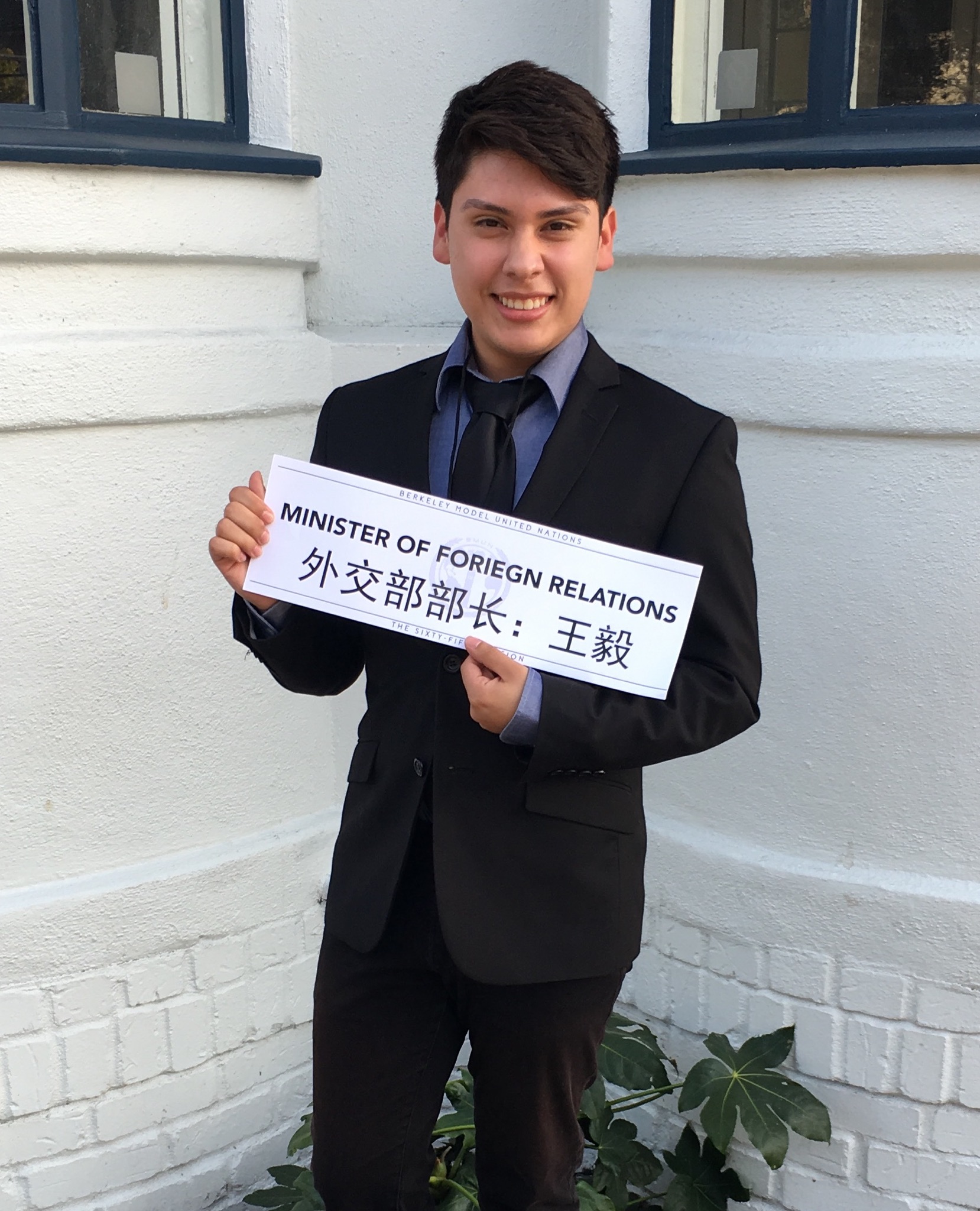 Languages have always played an important part in my life. From the moment I was born, I was constantly exposed to both English and Spanish. Then, in sixth grade, my fascination with Mandarin Chinese began after a Fulbright Scholar from China came to our school to be our Chinese teacher. I continued to study the language in Chinese school, and fell in love with Taiwan and its culture. Then, I began my journey with Japanese just before high school, and began to appreciate the elegance and grace of the written and spoken aspects of the language. Most recently, my appreciation for Korean dramas and entertainment has led me to formally study the Korean language at the Korean Cultural Center in Los Angeles. I would most certainly not be who I am today had I not gained the experiences I have through my language learning.
Two of my most notable experiences are my 2016 Chinese as a Second Language classes in Taiwan, and my 2017 AID Summer Program. In the summer of 2016, just after my junior year of high school, I was given the amazing opportunity to go to Shih Hsin University in Taipei, Taiwan to study Mandarin Chinese for a whole month. While there, I dedicated myself to learning Chinese every minute of every day. Whenever our group went out, we had to use Chinese, since hardly anyone spoke English. This was very challenging, especially since I tend to use a combination of Chinese and English when I speak with my Chinese-speaking friends. However, my Chinese proficiency was able to flourish because of the fact that I had to constantly use the language. I even began to understand Chinese without first mentally interpreting it in my head.
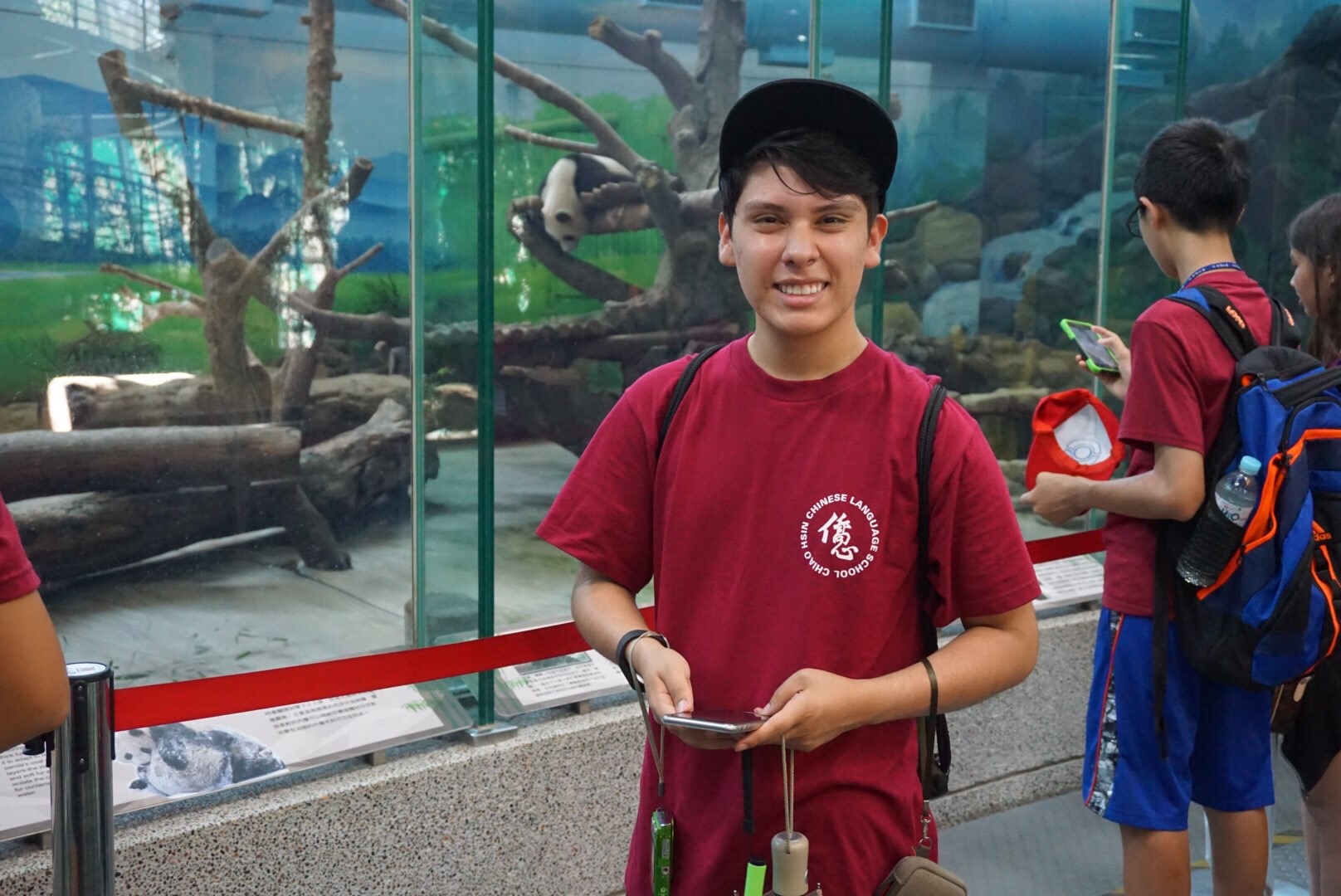
During my stay, I also immersed myself in Taiwan’s culture. Every evening, after classes, we would venture out into the streets of Taipei and see what the city had to offer. I remember the distinctness of the night markets and the lively crowds that would pour into them at night––a stark contrast to the quieter nightlife of California. People only seemed to come out at night when the hot air was bearable and all the traffic of the busy day had subsided. I was not accustomed to such a lively night culture, but I very much enjoyed experiencing how different it was from the Californian suburbs. Every night I would order my favorite treats like popcorn chicken, grilled squid, and boba, as we wandered around the streets of Taipei. When I would order in Chinese, people would give me surprised looks and ask about my background. My double eyelids and high-bridged nose drew curiosity any time I spoke in Chinese. The question I found people most frequently asking was some variation of, “Which one of your parents is Taiwanese?”
This trip not only gave me the chance to learn more Chinese than I ever had before, but also gave me the opportunity to develop myself as a person, and strengthen my Chinese abilities. Knowing the value, I took the course very seriously and finished with the second highest grade in the class. This was an opportunity that is not available to many, and I feel that I made the most out of this short time in Taiwan.
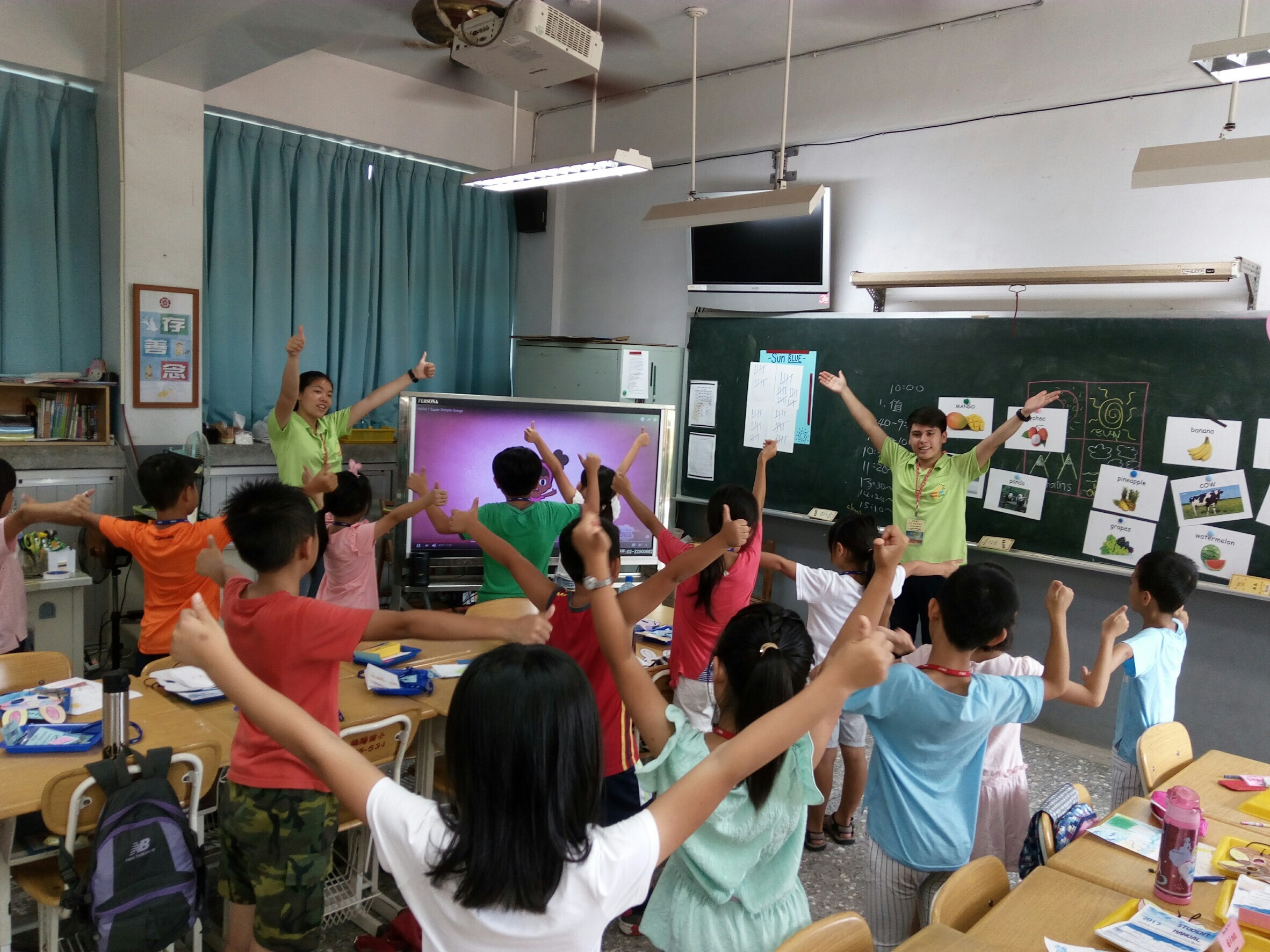
My second most notable experience was just last summer, when I returned to Taiwan to teach children English through the AID Summer Program. AID stands for “Aiding Individuals with Disadvantages.” Through this program, over 400 high school and college students from English-speaking countries around the world went to Taiwan to teach English as a Second Language to Taiwanese children living in rural areas. We spent our time training, planning, and of course, teaching. The days were long and exhausting, but all of our efforts were proven to be very successful once we saw how much the children were enjoying learning English.
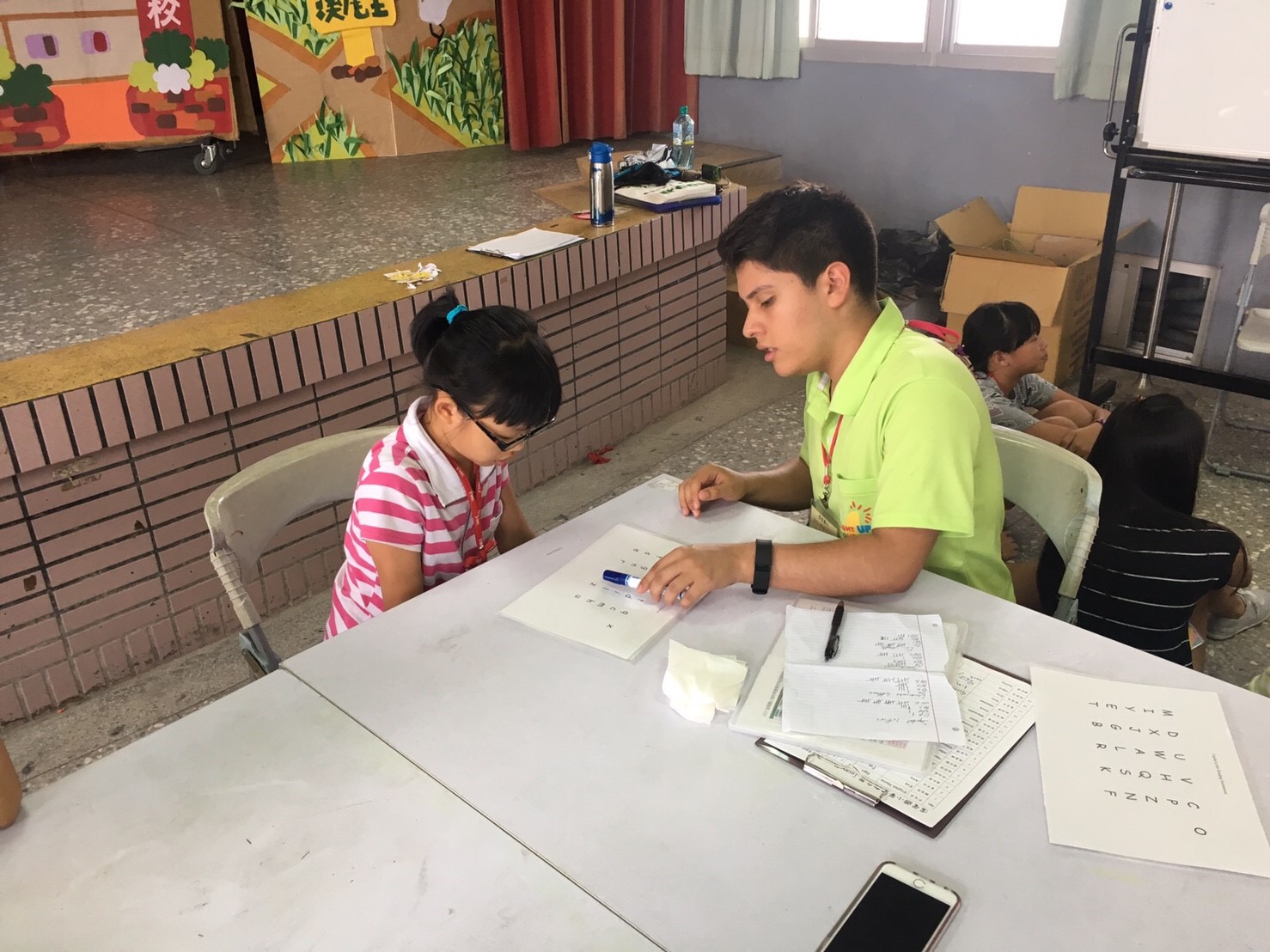
I quite honestly had no idea what to expect when I signed up for this program. I thought that it would be extremely difficult to work with children. However, we were all placed into small teaching groups so that we could work together to make the English-learning experience as unique, effective, and fun for all of the students. The six-, seven-, eight-, and nine-year-olds that I worked with had a willingness to learn that I was not at all expecting. Every day they seemed so enthusiastic and excited to learn. This was an incredibly rewarding experience, because the results of our efforts were immediately evident in the smile on our students’ faces.
Since I started learning Chinese in the sixth grade, I have had a passion for learning foreign languages. Chinese is very different from any other language I know. One of the biggest differences that has posed a challenge for me is the tonality of the Chinese language. Because I spoke Spanish and English as I grew up, I never even knew what a tonal language was until I started studying Chinese. I remember the first time I tried ordering a dish in Taiwan. I confidently asked the waitress for some soup (tang), using the wrong tone. She looked at me with a puzzled expression before coming back with a bowl of sugar. I realized that I had used the wrong tone and said “sugar” instead of “soup”.
After this embarrassing experience, I lost much confidence in myself and in my Chinese ability. I shared my embarrassing story with my Chinese teacher. She encouraged me to reflect on the event as a source of motivation to improve my Chinese language skills. I took her advice seriously and dedicated myself even more fully to studying and practicing my Chinese. I learned not to fear mistakes and, instead, embrace and learn from them––advice that I not only apply to my language learning, but also to other areas in my life. My Chinese has significantly improved since then, and I try to use Chinese whenever I can. I still have trouble with some tones today, but I try my best to correct my errors and learn from them. I have not been discouraged from continuing to learn Chinese, despite the difficulties. Instead I have realized just how fun and rewarding learning a new language can be, and I continue to learn more languages. Learning other languages has given me the chance to step out of my comfort zone and has opened up many opportunities in my life. I hope that one day I can be as supportive and influential for those learning another language as my teachers have been to me. Whether it be teaching English abroad or teaching foreign languages locally, I hope to be a source of encouragement for those who want to learn another language in the future.
Learning about cultures and languages has allowed me to be a more aware and open individual. Tolerance and understanding are the most important values to me, and I believe that learning about cultures and languages has allowed me to be a more aware and open individual. My experiences in languages have led me to many different opportunities so far. Since these languages have given me so many opportunities throughout my life, I would like to continue to pursue them and formally make them a part of my career.
Through the Whittier Scholars Program, I would like to bring together the disciplines of Chinese, Japanese, and International Business Administration to create a major centered around culture, business, and languages of East Asia. I anticipate creating a major that specifically incorporates Chinese and International Business, and working towards a traditional Japanese minor. I would like to focus on advertising, marketing, and customer service of businesses here in Los Angeles, as well as in Korea, Japan, and Taiwan. I also want to build upon my existing knowledge of foreign languages so that I may have the linguistic skills necessary to be successful in a range of environments.
Some of the topics I would like to explore include the use of language in business practice, specifically the advertising scene––how wording affects the audience, how to be sensitive to overseas cultures, how make an advertisement effective. I would also like to explore how foreign customs and cultures affect business practices and etiquette in the business scene––how to appeal to foreign companies and business leaders, how to work well with colleagues in a foreign setting, and how to communicate effectively.
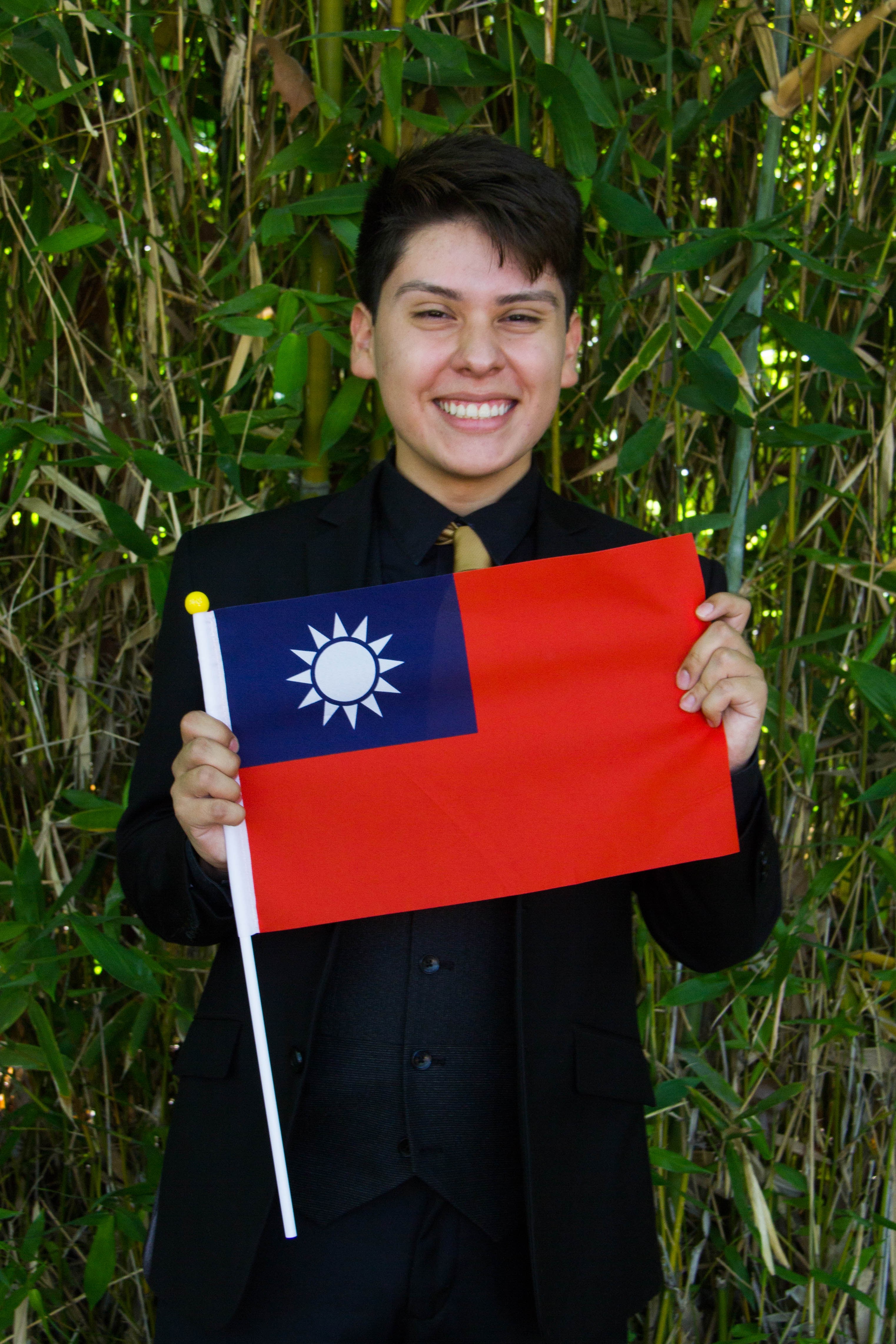
My Chinese-learning experiences have led me to become an advocate for Taiwan. Taiwan is a country that I believe is extremely under-represented on an international level. I hope that I may continue to support Taiwan’s campaigns to increase the use of Traditional Chinese characters and to increase the number of students studying Chinese as a Second Language in Taiwan.
I look forward to what the future holds and to all of the opportunities that I have yet to pursue.
